6-DOF Sensor ForceFilm Lamination Fixture
- Where
- Forcen
- When
- July 2026
Objective
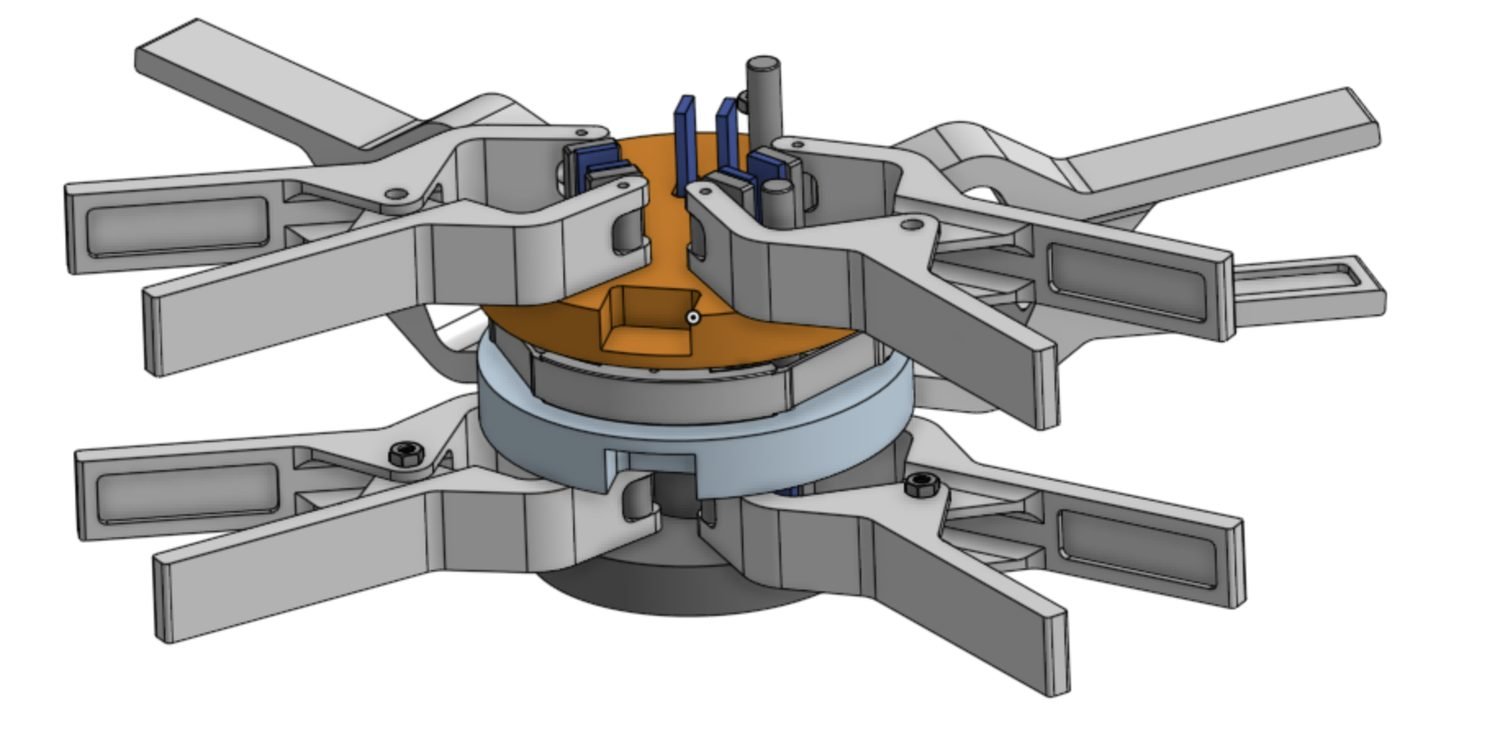
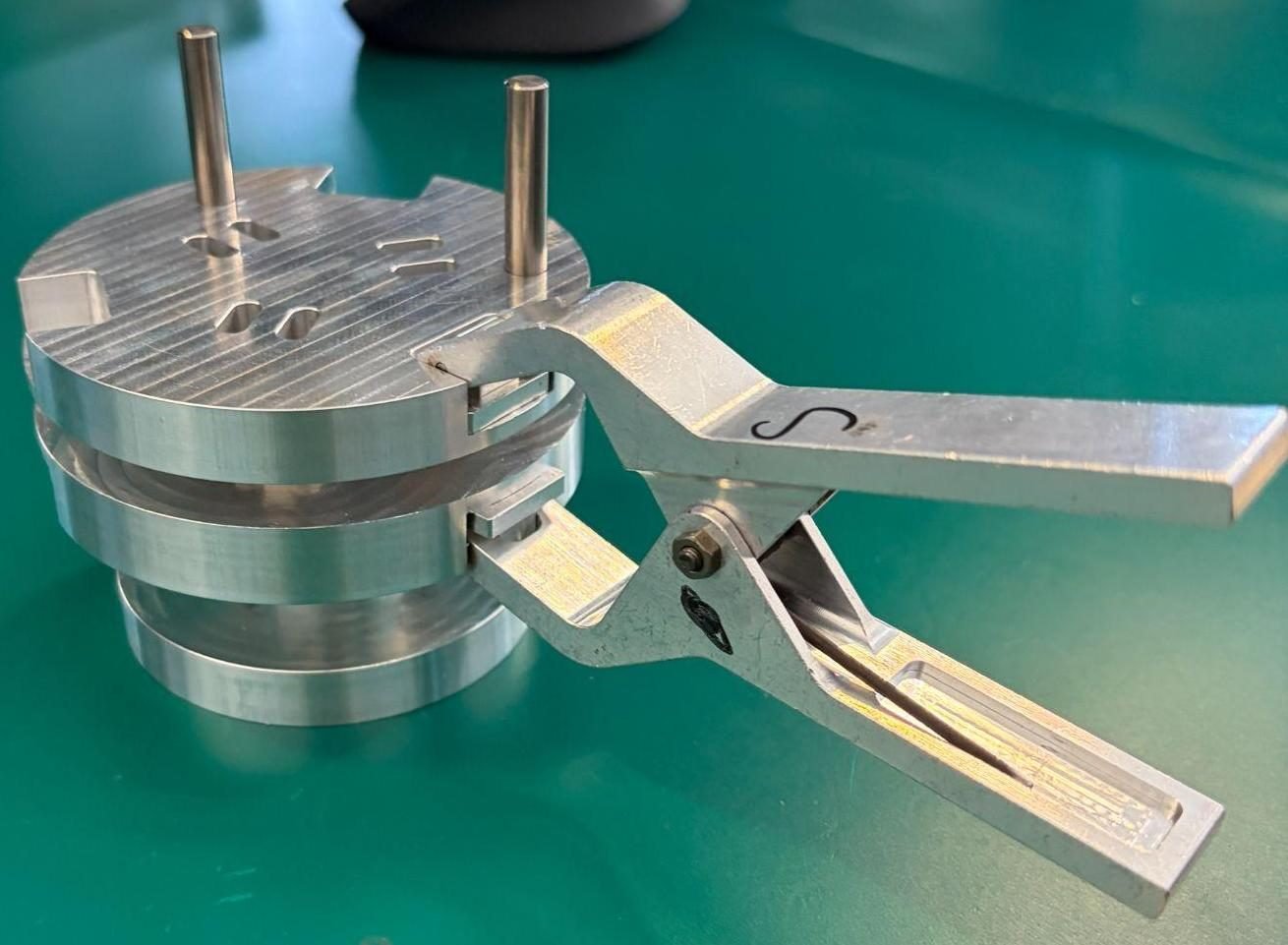
Design a dedicated aluminum lamination fixture for a 6-DOF Hyperslim sensor built for a surgical robotics customer. Lamination bonds Forcen's ForceFilm, a digitally manufactured transducer array, onto the sensor body and holds the strain gauges in position, so lamination accuracy directly governs sensor accuracy through calibration and every downstream step. The existing process used individual clamps at each contact point, with no dedicated tooling. That introduced operator variability and misalignment, took a long time, and caused a 30% sensor failure rate during lamination.
Outcomes and contributions
- Cut lamination time by roughly 5×, and enabled multiple sensors to be laminated in a single operation rather than one at a time.
- Achieved a 100% lamination success rate across all sensors tested, against a process that previously lost sensors to misalignment and inconsistent clamping.
- Fixture adopted as the standard tool for manufacturing this sensor, and used to laminate 10+ sensors to date.
- Owned the project end-to-end: process R&D and clamp characterization, CAD, FEA, technical drawings, machining, assembly and validation testing.
Design decisions
- Characterized clamp force empirically. Testing showed clamp force rising exponentially with opening width, so I fitted a curve of best fit to the opening-width and force data and used it to predict force for a given configuration.
- Reduced clamp opening width to bring force down into a controllable range, exploiting the exponential relationship above.
- Increased pad and film contact area to reduce pressure at the bond interface, since pressure is what the process is actually sensitive to.
- Iterated clamp area and width together against the fitted curve to arrive at a pressure per clamping surface below the 80 psi ceiling, landing just under 80 psi at the highest-loaded surface.
Technical details and skills
- CAD and fully dimensioned technical drawings in Onshape, toleranced for in-house machining.
- FEA on the fixture body to confirm no deflection under clamp load, and on the bolted joints to verify bolt stress.
- Empirical force and pressure characterization through clamp testing and curve fitting.
- Machining, assembly and hardware validation of the delivered tool.
- Aluminum, fixture and tooling design, DFM, GD&T.